AI Fleet Maintenance: The 2026 Adoption Gap



One 2026 fleet benchmark analysis found that 53.3% of fleets are researching or piloting AI, while only 5.6% report using it broadly. That distance between interest and deployment is the real story of AI fleet maintenance in 2026, and it is where the fleets pulling ahead are building their advantage.
The gap between interest and action
The industry has already decided AI matters. In a Microlise survey of 250 transport and logistics decision-makers, 70% said they believe 2026 is the year AI fundamentally transforms transport management, up from 36% the year before. Adoption in specific use cases is climbing fast too. Fleet Advantage's 2026 survey found AI use for maintenance scheduling nearly doubled in a single year, from 33.3% to 64.5%.
Deciding AI belongs in your operation and running it across your maintenance program are two different things. Most fleets are stuck in the space between them.
You are probably sitting on the data already
Here is the part most fleets miss. You almost certainly already generate everything an AI needs. More than half of fleets collect telematics and ELD data today, yet only 9.7% use AI to turn that data into real-time insight.
The raw material is there. What is missing is a system that reads it continuously and acts on it. That is the difference between a system of record, which stores what happened, and a system of intelligence, which tells you what to do next.
What AI fleet maintenance looks like day to day
It helps to be concrete, because the word AI covers everything from a simple mileage alert to real machine learning. In a working operation, AI shows up as specific jobs: predicting a component failure before it becomes downtime, translating a fault code into a plain-English action plan at the shop or roadside, reading and coding repair invoices without manual entry, auditing repair orders for anomalies before they get paid, and answering plain-English questions about cost and labor.
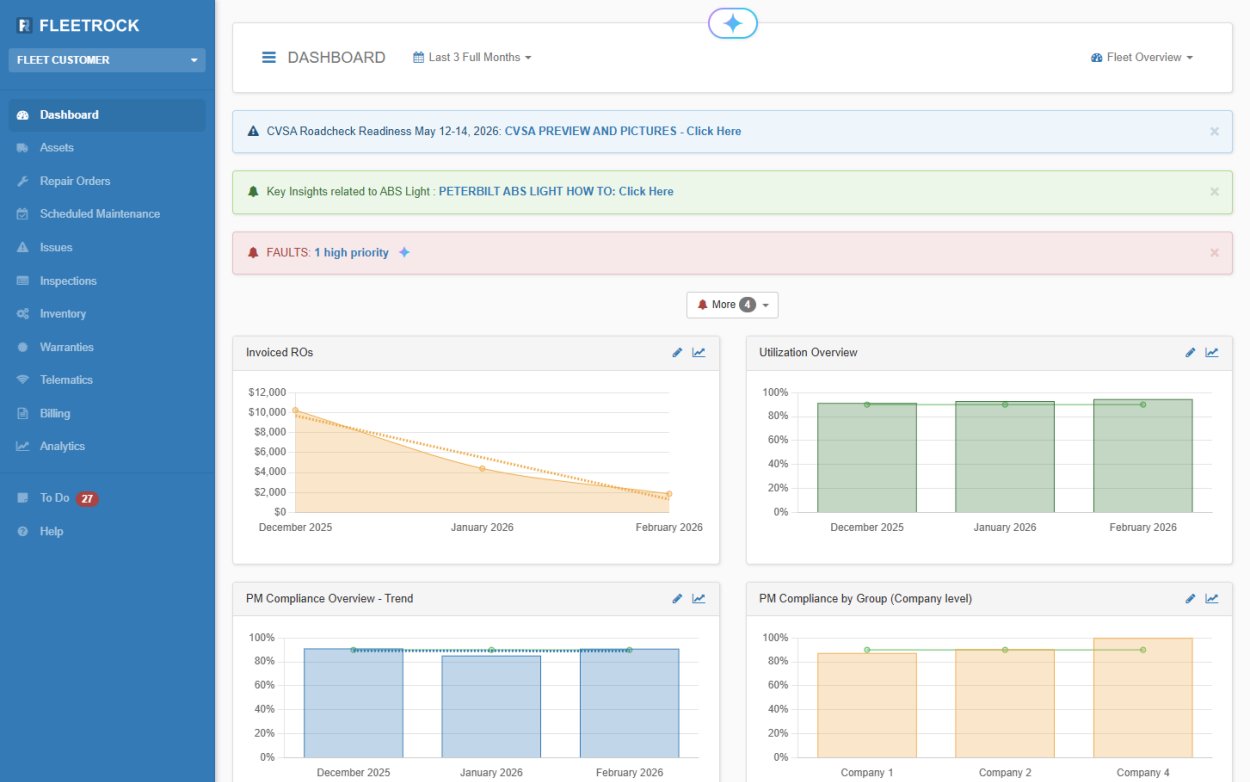
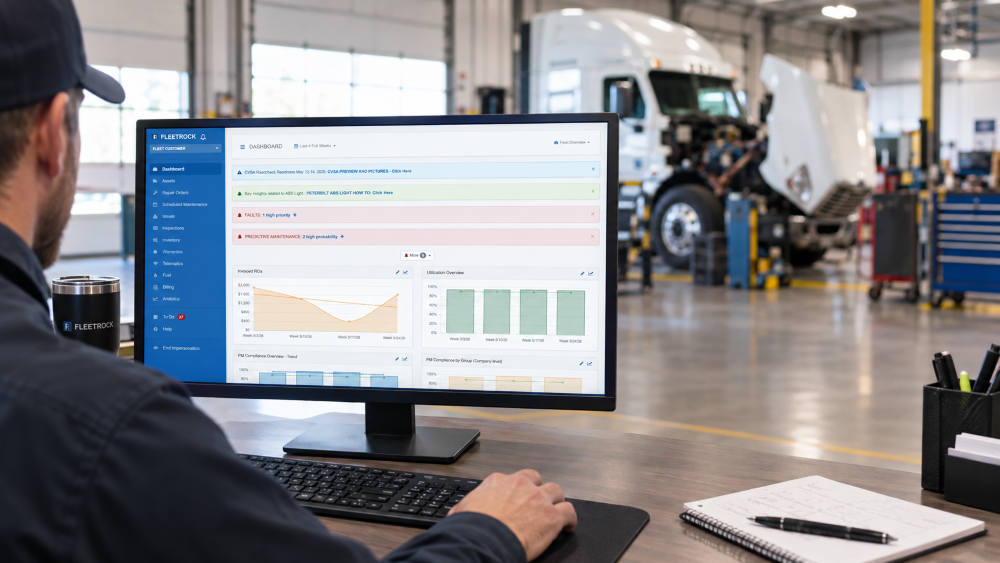
Fleetrock builds these as a connected set of AI capabilities embedded across the platform rather than a single tool bolted on the side. Each one attacks a specific, daily source of cost.
Why deployment stalls
Two things keep fleets from crossing the gap. First, a lot of AI is sold as one feature, a standalone chatbot or an analytics add-on, that sits apart from the data the fleet runs on. It never sees the full picture, so its answers stay shallow. Second, teams brace for a heavy rollout: new software to learn, a data-science project, months of setup. In one benchmark, half of fleets named accuracy and reliability concerns as their main hesitation.
Both problems shrink when the AI lives inside the system the fleet already uses and reasons over the same live data every workflow feeds it.
What crossing the gap looks like
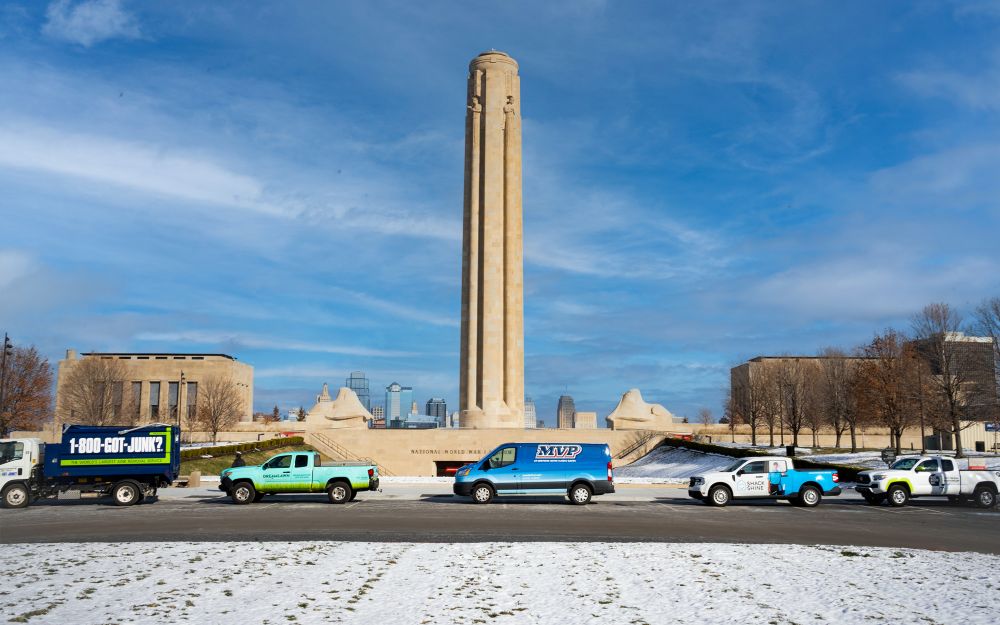
Southwind, a multi-brand home services operator running 20 companies across North America, shows the payoff. The company consolidated fragmented data onto one platform and put AI to work on it. AI Invoice Import ended manual entry of outside repair invoices and recovered three weeks of administrative time. Unified data and analytics then gave leadership the visibility to cut total fleet size by 17% without losing operational capacity, raise uptime by 13%, and lift preventative maintenance compliance by 38%.
Those numbers compound. A fleet that is 17% smaller and 13% more available delivers the same work with materially less capital, fuel, labor, and overhead.
Closing your own gap
The gap will not stay open for long. As the fleets that have deployed pull their costs down, calendar-based and reactive operations fall further behind every quarter. Moving does not require a data-science team or a rip-and-replace. It requires starting with the data you already have and one workflow that is costing you money.
See how Fleetrock turns the data your fleet already generates into decisions you can act on today on the Fleetrock AI page, or read the full Southwind case study.