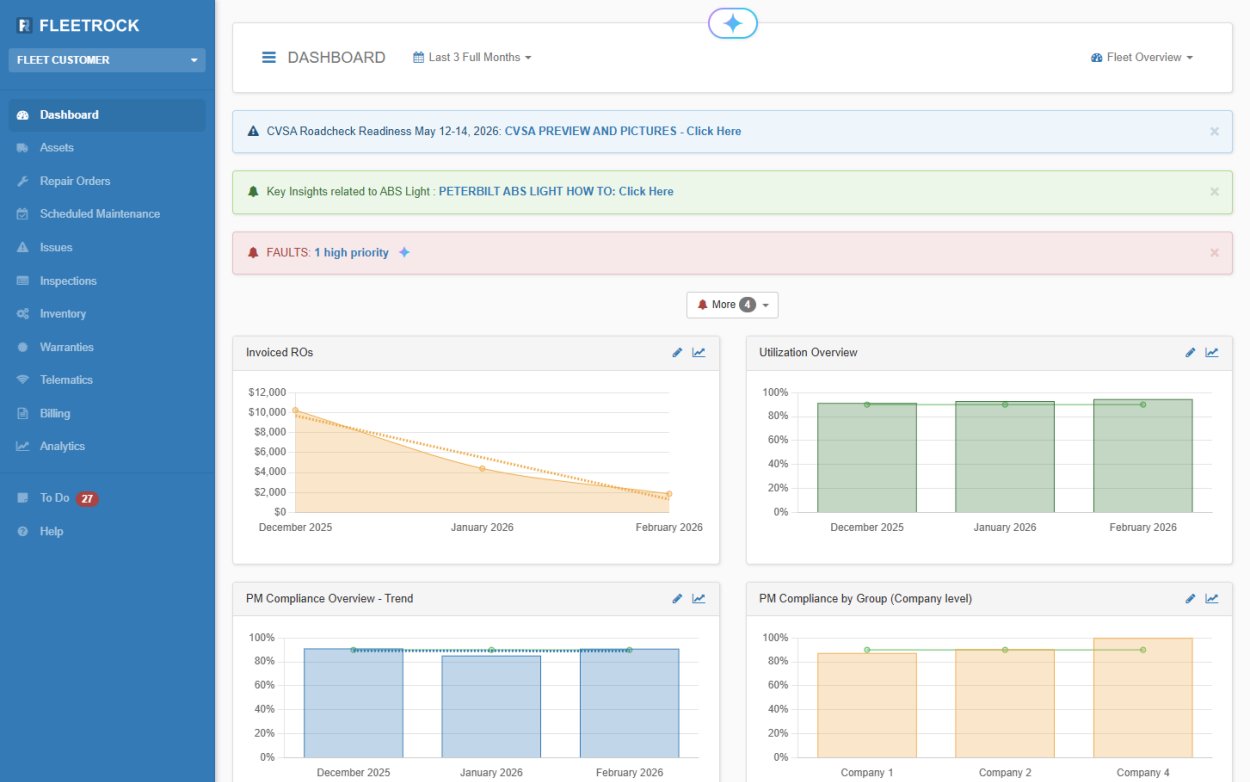
Shop Management Software for In-House Fleets



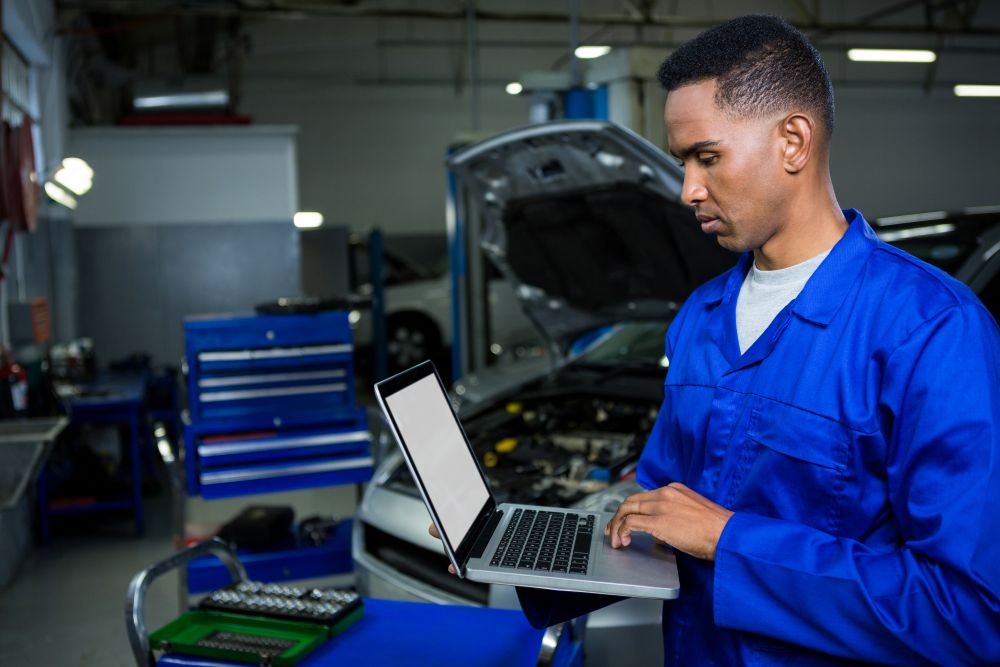
If your fleet maintains its own vehicles, you are probably running the operation on two systems: one for the fleet, one for the shop. Every repair that crosses between them is a chance for a number to get rekeyed, a part to go untracked, or a job to stall. That handoff is where the money leaks, and shop management software built for fleets is how you close it.
The cost of running two systems
Most in-house shops grew up separate from the fleet software. The fleet system knows the asset, its history, and its PM schedule. The shop tool, or the spreadsheet, knows the repair order, the parts, and the labor. Neither one sees the whole job.
A technician closes a repair in one place, someone rekeys it in the other, and the asset record and the shop record slowly drift apart. Meanwhile the vehicle waits. Unplanned downtime runs between $448 and $760 per vehicle per day, so every hour a repair sits stuck between two systems has a price attached to it.
What an in-house shop needs
The fix is not a better second system. It is one system where the shop side and the fleet side share a record. When a driver logs a defect or a PM comes due, it should open a repair order without anyone retyping it. Parts pulled for that job should draw down inventory on their own. The invoice should close against the same record the repair started from.
In practice that means repair orders, estimate approval, parts and inventory, invoicing, scheduling, and shop analytics living in one place, tied to the asset. Cycle time analysis and PM quality analysis tell you where jobs slow down. Nothing gets entered twice.
Why bolt-on integrations create friction
Some platforms handle the shop side through a third-party integration or an outside shop network. That works until it does not. Data syncs on a delay, fields do not map cleanly between systems, and a change made in one place takes hours to appear in the other. You end up managing the connection instead of the shop.
Native shop management removes the sync problem because there is nothing to sync. Fleetrock builds shop management as a first-class part of the platform, not a partner add-on, so the repair order and the asset live in the same record from the first line item. For a fleet that runs its own shop, that single detail decides whether the two sides of the operation actually work together.
One record, less admin and better repair quality
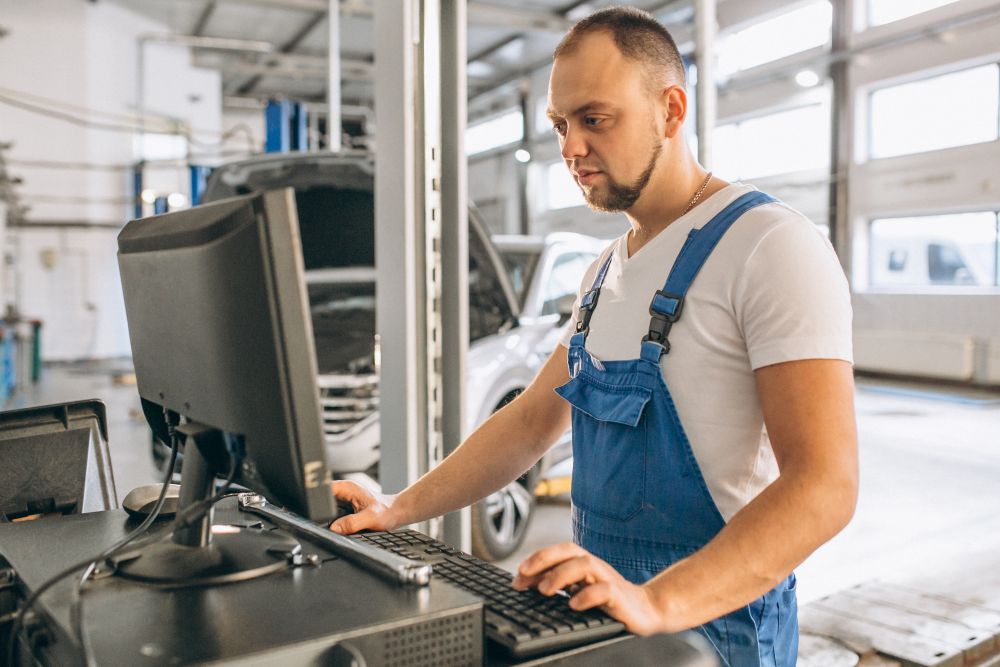
When the shop and the fleet share a record, the payoffs stack. Technicians stop rekeying, so administrative work drops. Approvals move faster because the estimate, the parts, and the vehicle history sit in one view. Repair quality climbs because every job is checked against the same labor-hour and pricing standards instead of living in a separate tool nobody audits.
The approved numbers back this up: Fleetrock customers see a 60% average reduction in administration and a 2x improvement in repair order quality. Southwind, a home services operator running 20 companies, consolidated onto one platform, ended manual entry of outside repair invoices, and recovered three weeks of administrative time, with real-time repair transparency and cleaner warranty recovery across the whole organization.
"The result is a more efficient process for the mechanics."
Shop Manager, McPhee Electric
What to look for in shop management software
If you are evaluating shop management software for an in-house operation, use one test: can a repair move from reported defect to approval to parts to invoice without leaving the platform or being typed in twice?
Look for repair orders tied to the asset record, native parts and inventory rather than a separate tool, billing in the same system, and analytics that measure cycle time and PM quality. Then look at the AI. When the same platform can audit repair orders for pricing anomalies before they get paid and import invoices without manual entry, the shop stops being a place that only records work and starts being one that speeds it up.
Running the fleet and the shop on one record removes the rekeying, the sync lag, and the blind spots a two-system setup builds in by design. For a fleet that maintains its own vehicles, that is the whole difference.
See how Fleetrock runs fleet and shop operations on one platform on the Shop Management page.